







Don't! Photography
and the Art of Mistakes
In 1909 Alfred Stieglitz published “Twelve Random Don’ts,” a manifesto like article that pokes fun at lists asserting what constitutes a good or a bad photograph. In the late nineteenth and early twentieth centuries, hundreds of these lists were printed in handbooks with titles such as To Make Bad Negatives into Good, Why My Photographs Are Bad, or Make Your Pictures Sing! some quite poetic, but all in the service o instuting a rigid photographic orthodoxy.
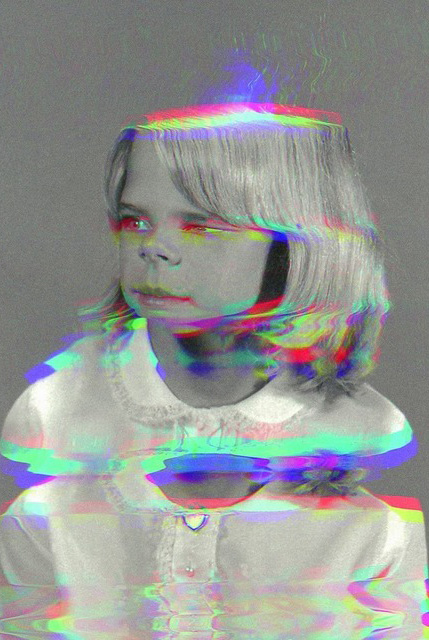
Modern art was partly build on the systematic subversion of such established rules. Between the 1920s and the 1950s, Man Ray, Lisette Model, and Florence Henri transformed the most common technical erros:including blurring, superimposition, and solarization into deliberate aesthetic statements. Laszlo Moholy-Nagy, one of the most important figures of the photographic avant-garde, learned a great deal by looking at the mistakes of amateurs and declared that “the enemy of photography is the convention, the fixed rules of ”how to do.’"
Sara Cwynar
Girl from Contact Sheet (Darkroom Manuel) | Printed 2013